



Why Vacuum IR Heaters Just Make Sense for Modern Semi Shops
The semiconductor world is pushing hard toward “lead-free” and “zero-emission” goals. For a long time, we’ve relied on big convection ovens. But here’s the problem: heating up massive amounts of air is a waste of energy. Worse, all that moving air is basically a delivery system for dust and particulates that can ruin a wafer. That’s why we switched to vacuum-compatible infrared (IR) heaters. It just cleans up the whole process.
How it actually works
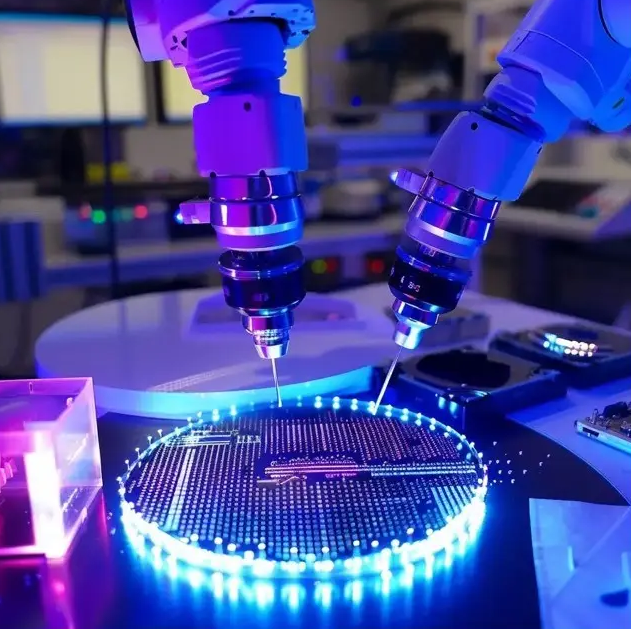
When you’re in a vacuum, you can’t move heat around with air. It’s physically impossible. So, we rely on radiation. Think of it like the sun hitting your skin. IR lamps send out electromagnetic waves that go straight through the substrate and heat the material itself. We aren’t wasting time warming up the walls of the chamber or the air around it. No forced air, no massive filtration systems. Just direct energy. It’s efficient. Your power bill stays lower, and your wafers stay cleaner.
Dealing with lead-free curing
If you’re working with lead-free solders or adhesives, you know they’re finicky. If the heat isn’t exactly right, you get oxidation or warping. We use short-wave radiation because it’s fast. Really fast. You can hit your curing temps in a matter of seconds. This means the components aren’t sitting in the heat longer than they have to. You avoid that “over-bake” nightmare that kills sensitive parts.
The reality check (The trade-offs)
Now, you can’t just grab any old lamp off a shelf and throw it in a vacuum. The seals and electrical feedthroughs have to be top-notch, or you’ll have leaks. And there’s the “gunk” factor. If your vacuum pump isn’t tuned for the specific resins you’re curing, you’ll get residue building up on the quartz tube. Once that happens, the IR waves can’t get through, and your heat drops. You’ll either need a rock-solid cleaning schedule or a specialized coating to keep things running smoothly. But once you get that dialed in? You’ve got a cleaner shop floor and a faster workflow, all while hitting those environmental targets. It’s a win-win.