
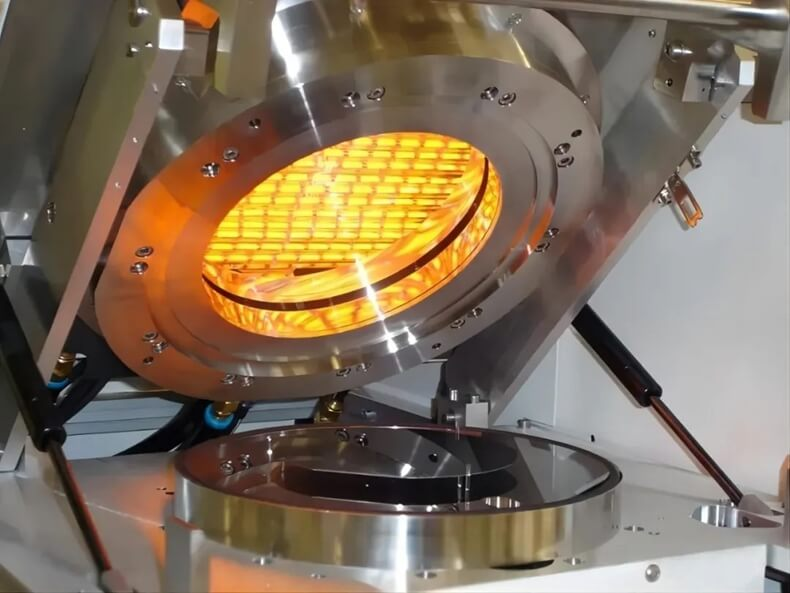
Stop Heating the Air: A Better Way to Dry MEMS Wafers
If you’ve spent any time in MEMS fabrication, you know the struggle of drying wafers. It’s a balancing act. You want them bone-dry and residue-free, but you can’t just blast them with heat or you’ll warp the whole thing. Most people just throw them in a standard convection oven. The problem? Those ovens heat everything. They heat the air, the walls, the chassis… everything but the wafer. It’s a waste of power, and it’s a nightmare for whoever has to do maintenance. There’s nothing quite like the panic of touching a tool wall that’s still hot enough to sear your skin. That’s why we switched to directional heating with short-wave IR lamps.
How it actually works
Think of it this way: convection is like trying to warm up a room with a space heater. IR is more like a flashlight, but with heat. The energy moves in a straight line from the lamp filament directly to the wafer. Because the heat is targeted, you aren’t wasting energy warming up the air around the part. The result? The wafer gets the heat it needs, but the outer skin of the tool stays cool to the touch.
Getting the specs right
We usually go with high-intensity quartz halogen tubes. We use quartz because it lets that short-wave radiation pass right through without soaking up the energy. It gives you that high power density you need to flash-dry a wafer in a hurry. But here’s the tricky part: the reflectors. You have to get the beam angle exactly right. If your alignment is off by just a few degrees, you’re not heating the wafer anymore—you’re heating the chamber walls. That’s exactly how you end up with those “burn” spots we’re trying to avoid. Alignment is everything.
The reality of installation
It’s not all plug-and-play. High-wattage IR lamps pull a lot of current. If your power supply isn’t ready for that initial surge when the lamps kick in, you’re going to have a bad day. And be careful when you’re handling them. These quartz tubes are fragile. One clumsy move during a swap and snap—there goes your lamp. To make life easier, we suggest using standardized connectors. It makes them a simple drop-in replacement. Just keep an eye on your ramp-up time. If you push the wattage too hard to speed up the cycle, you’ll burn out the filaments way faster than you should. It’s all about finding that sweet spot between speed and longevity.