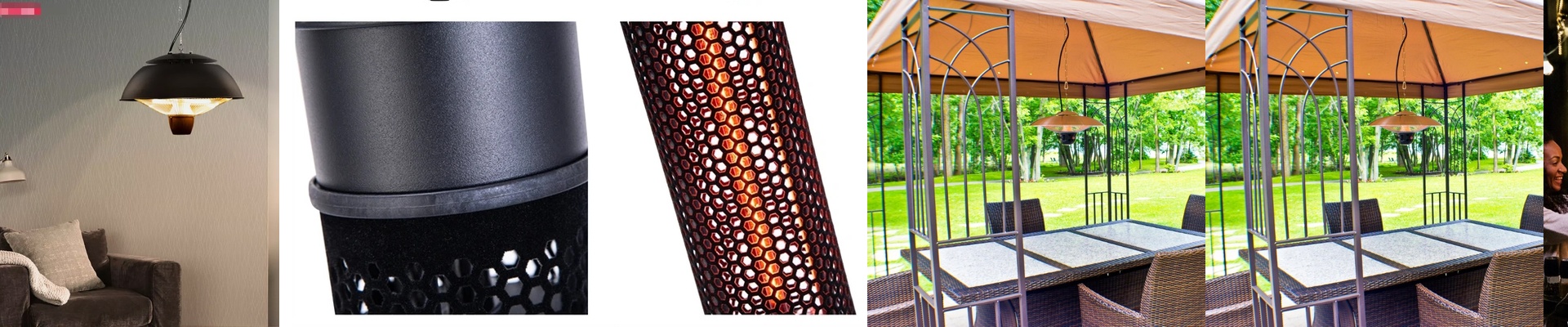
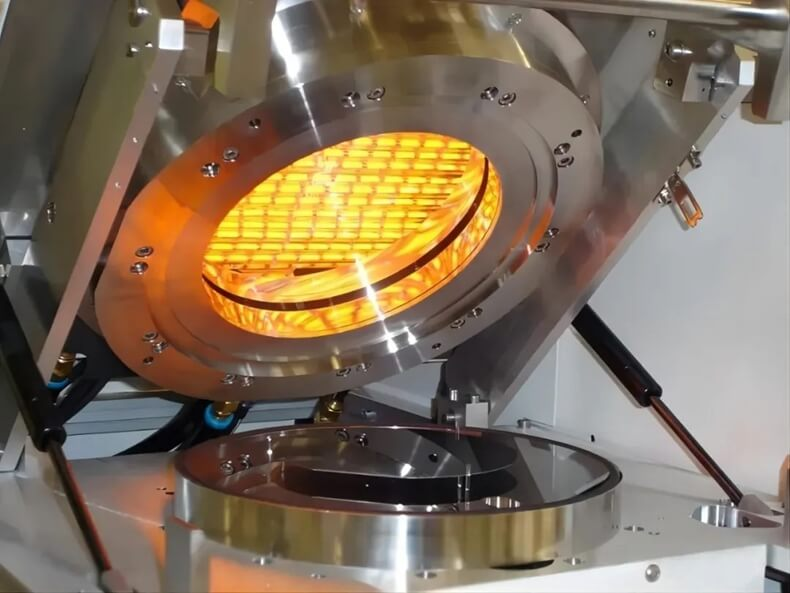
On the fab floor, you’ve got a 150 mm SiC wafer sitting in the lithography cell, ready for photoresist bake. Temperature drift of just a few degrees will throw off critical dimension control and cost you a whole lot. So the heater lamp can’t just be a heat source—it has to behave like a repeatable thermal instrument. What matters under the hood We built the SiC wafer processing heater lamp around short-wave infrared halogen emitters in a quartz envelope, tuned for snappy response and stable output. You get wafer-level uniformity within ±0.1°C across the bake zone, and setpoint repeatability of ±0.5°C from lot to lot. Power density is matched to photoresist soft bake and hard bake profiles, and the thermal profile holds after 5,000+ hours with less than 5% output drop. The package is cleanroom-compatible for Class 1–100, with bonded joints and shielding that keep particle generation at zero during operation. Why it fits SiC work SiC wafer processing is tight on thermal budget, and the cost per wafer is steep. This lamp gives you the precision needed to hold photoresist bake profiles without overshoot or undershoot, so scrap and rework drop. Fast ramp-up cuts cycle time, and stable emission trims energy use. The design is engineered as a drop-in equivalent to international semiconductor equipment standards, so you can swap it in without requalifying the whole tool. A few practical notes Installation comes down to matching the tool’s connector interface and confirming the voltage tap—mismatched wiring will bite you on uniformity. The lamp works with standard bake stations, but you have to align the reflector geometry to the wafer size. Plan on a quick calibration run after swap-in to lock the recipe to your process.