




Cutting Carbon in the Fab: Why we’re switching to IR
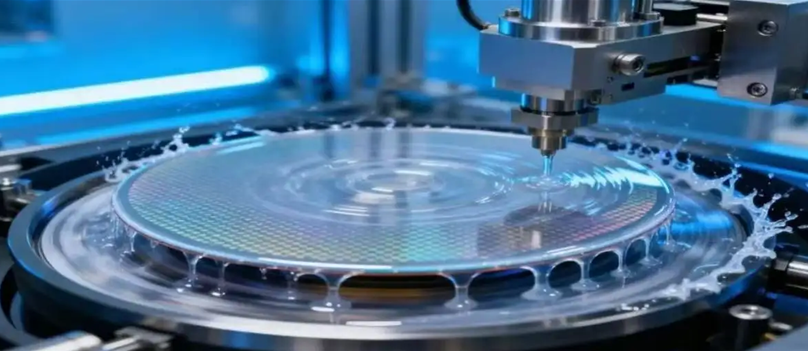
Everyone’s talking about carbon neutrality these days, but for those of us in semiconductor fabs, it’s a tough nut to crack. The old-school resistive heating we’ve relied on for years is just too wasteful. That’s why we’ve moved toward shortwave infrared (IR) lamp systems. Think of it like this: instead of heating up the entire room just to warm up a cup of coffee, you’re using a laser. We aren’t wasting energy heating the whole chamber; we’re sending that energy straight into the wafer. It’s cleaner, faster, and way more efficient.
The magic of Rapid Thermal Processing
We build these systems to move a massive amount of heat, and they do it instantly. By using tungsten filaments inside halogen-filled quartz, we can ramp up the temperature in a blink. No more waiting around for long pre-heating cycles. You know that “idle” heat soak you get with old furnaces? That’s just money and electricity disappearing into thin air. With IR, that’s gone. Plus, we can control exactly where the heat goes. If only one part of the wafer needs the juice, that’s the only part that gets it.
The gritty details (and the trade-offs)
Now, it’s not all plug-and-play. These are high-wattage arrays, and when you’re doing dopant activation or annealing, the heat density is intense. You can’t just set it and forget it. If your cooling manifolds aren’t up to the task, you’re in trouble. The reflected radiation and the heat build-up in the housing can fry your lamps in a matter of hours if the cooling fails. It’s a high-performance tool, which means it needs high-performance maintenance. To keep things from breaking, we use reinforced quartz so the tubes don’t bow under the stress. And because nobody likes spending six hours on a simple repair, we kept the connectors simple. You can swap them out quickly during a maintenance window and get back to work.
What this actually does for the “Green Factory”
At the end of the day, this is about the footprint. By stripping away the heavy thermal mass of old equipment, we don’t need nearly as much energy to hit operating temperature. And when the job is done? They cool down way faster. For the engineers on the floor, it means a lighter draw on the grid and shorter cycle times. It’s a way to pass those “Green Factory” audits without having to slow down production or hit the brakes on throughput. It just works.