On a 300mm line, the scheduler doesn’t pause just because your bake profile drifted. A soft bake that’s off by half a degree can kick off a linewidth excursion that snowballs into scrap. Convection ovens fight you on cleanroom space and cycle time, and hot plates? They give you edge-to-center gradients that force a yield-for-throughput trade you can’t really afford.
What actually matters under the hood
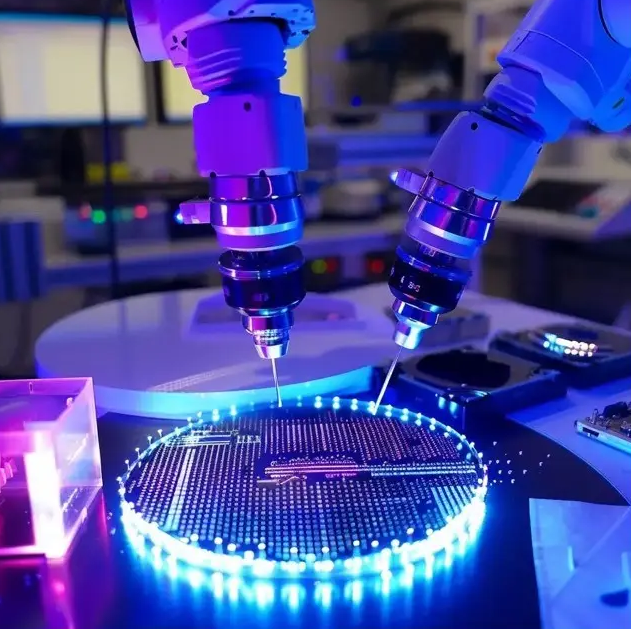
We built the linear infrared emitter around one hard constraint: temperature uniformity across the wafer, not just the average. Short-wave NIR goes through a stabilized quartz window, tuned so the spectral output is absorbed preferentially by the photoresist stack. That keeps the substrate from overshooting. The payoff is wafer-level uniformity of ±0.1°C across the active bake zone, with ramp-up that responds in single-digit milliseconds. The emitter runs in Class 1–100 cleanrooms because the assembly is sealed—particle generation is essentially zero, and outgassing is controlled so the lithography stack stays protected.
Why this holds up in production
Out on the floor, the emitter runs 24/7 with zero unplanned downtime. Soft bake and hard bake profiles stay repeatable, without that drift that forces you to re-qualify. Tight uniformity cuts CD variation, tightens overlay, and drops rework. Energy use falls because we only heat the target zone, not the whole chamber. The emitter life runs past 5,000 hours with under 5% output decay, so you’re carrying fewer spares, spending less PM labor, and avoiding risk during tool changeovers.
The fine print you need to plan for
The emitter demands precise optical alignment and a dedicated, regulated power bus to keep spectral stability where it needs to be. If alignment is off, you’ll see a hot-band across the wafer. You also need a clean, dry purge to keep the window from fogging at low bake temperatures. Plan the integration into the litho track controller and the bake module interface, and make sure you confirm your photoresist absorption curve to set the NIR power density correctly.