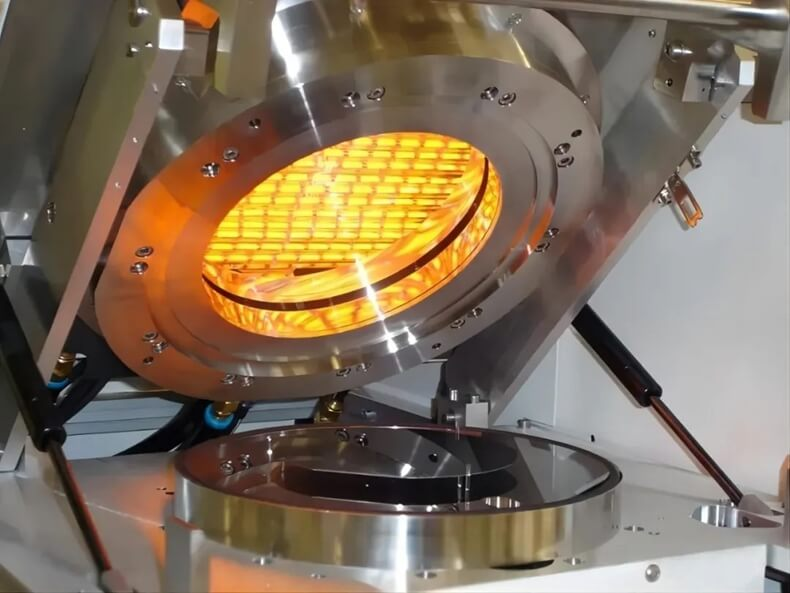
On the wafer floor, thermal drift during photoresist pre-bake or wafer drying isn’t just a line-speed hit. It puts defects on the wafer—defects you can’t afford. Infrared lamp sockets for wafer tools are built around one job: keeping process temperature where it needs to be—stable, repeatable, and inside the film’s thermal budget. What actually matters under the hood We use short-wave infrared emitters paired with a quartz socket and reflector geometry that puts heat where you want it—fast and directional—without hot spots. That gives you wafer-level uniformity within ±0.1°C across the bake zone. Ramp-up is controlled, so solvents clear the photoresist cleanly during soft bake, and the resist profile stays tight after hard bake. The socket interface is meant to drop into tools: compact footprint, standard mounting, and solid electrical contact. The payoff is consistent output lot after lot. Why this heat source earns its keep This is the heat you lean on for steps that can’t be messed up: wafer drying that prevents watermarks, soft bake that sets resist thickness and adhesion, and curing that locks the pattern before etch. Precision matters because over-bake shifts critical dimension, and under-bake leaves solvent behind—then you get footing, peeling, or both. Our infrared approach cuts thermal inertia, shortens cycle time, and keeps particle count down in Class 1–100 cleanrooms. Units run 5,000+ hours with less than 5% output drop, which means fewer lamp swaps and less unplanned downtime. The details that keep it from biting you Infrared gives speed and uniformity, but it still needs disciplined thermal management. Mount the socket with the specified clearance so nearby components don’t cook, and match the emitter to the tool’s voltage and cooling profile. Plan a short commissioning run to tune the bake profile against your resist stack. Once it’s dialed in, the process window stays tight, predictable, and easy to hold.