On the fab floor, the photoresist bake isn’t a warm-up. It’s the gatekeeper for linewidth control. Let a 2°C drift show up across the wafer, and your critical dimensions move on you. Medium wave quartz heater tubes are built to stop that drift before it even gets started.
What matters, technically
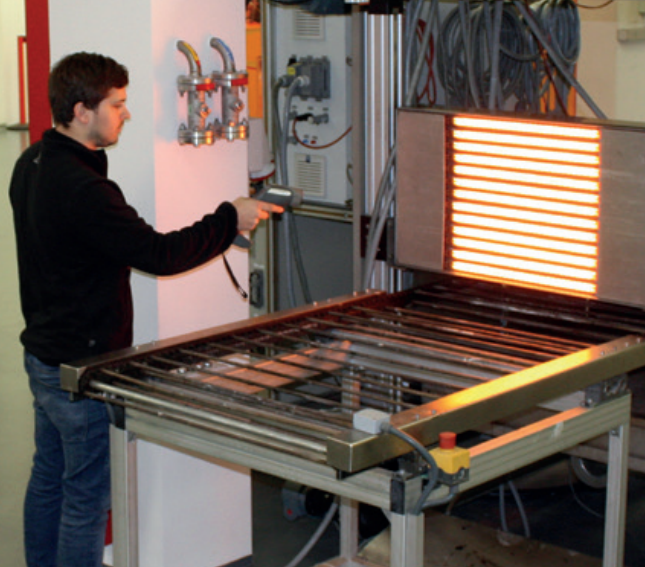
Medium wave quartz emits in a band that couples cleanly into photoresist and polymer films, so you’re heating the film—not the chamber walls. The payoff is sub-millimeter thermal uniformity with repeatability you can count on. In production, that translates to ±0.1°C across the wafer at the bake surface, and setpoints that stay put lot after lot. Tube geometry and emissivity are tuned for a fast, controlled ramp and a repeatable soak, so your soft bake and hard bake profiles don’t drift between shifts.
Why it holds up in lithography
Photoresist processing is all about thermal budget discipline. These tubes hold temperature under high thermal load without hot spots, and they keep particle generation near zero—easy to live with in a Class 1–100 cleanroom. You get faster cycle times with lower energy draw, fewer reworks born of bake nonuniformity, and yields that don’t swing. Twenty-four-hour reliability isn’t a slogan; it’s baked into the material choices and the thermal design, which means less unplanned downtime.
The practical details you’ll want to keep in mind
Medium wave is tuned for organic films and photoresist. It’s not the right fit for substrates that absorb strongly outside that band. You’ll get the fastest, cleanest bake when the tube is matched to the chamber geometry and your process window lines up with the emission spectrum. Installation matters. Respect clearances and the emissivity interfaces—small misalignment can shift uniformity by a few tenths of a degree. And plan for periodic calibration to keep that ±0.1°C baseline across wafer sizes.